Why the right off-white can completely change a room.
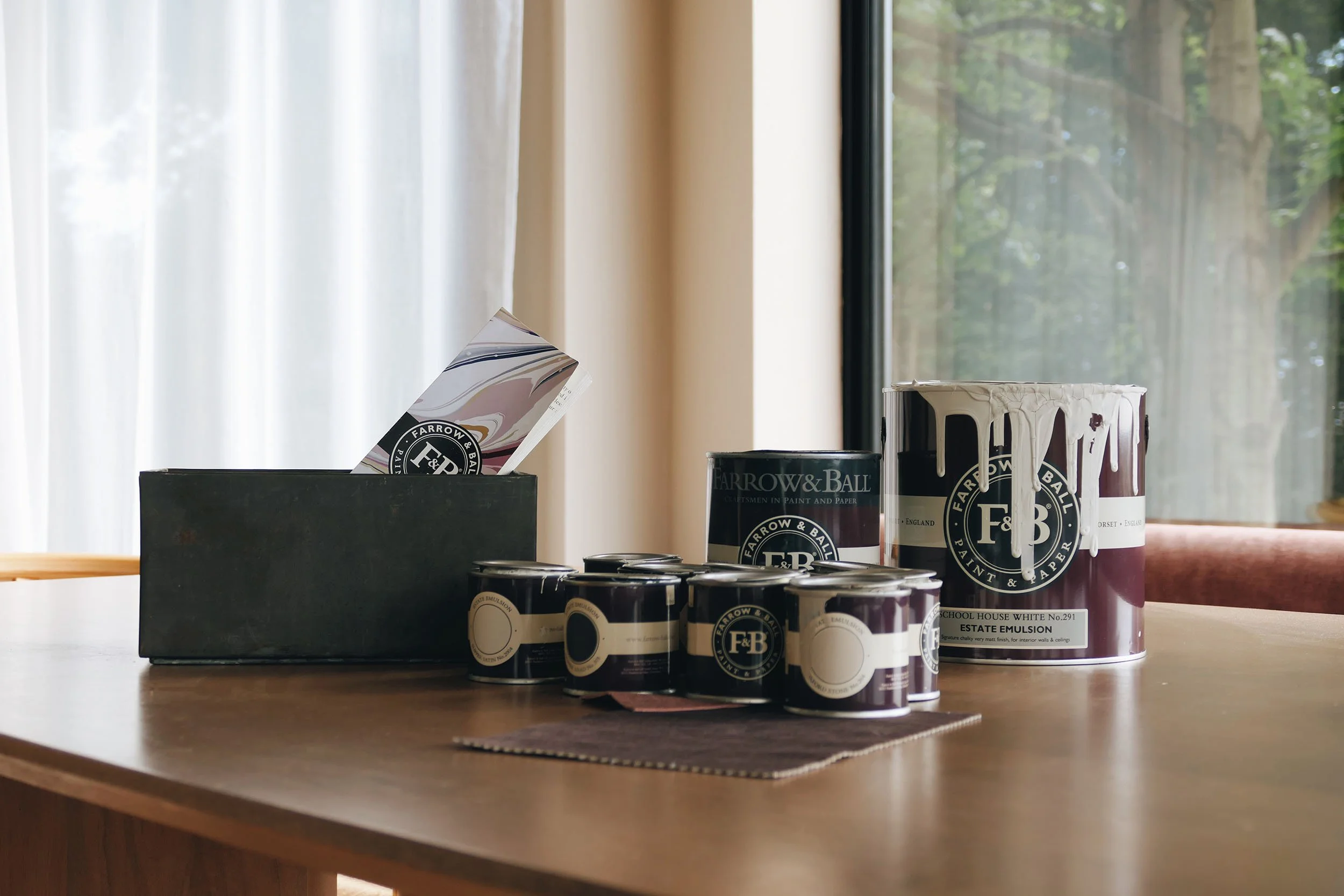
White is often considered the safest option when designing a home. Clean, simple and timeless, it has long been the default choice for interiors. Yet in practice, pure white can sometimes leave a space feeling flat or disconnected, particularly in homes layered with natural textures and warmer materials.
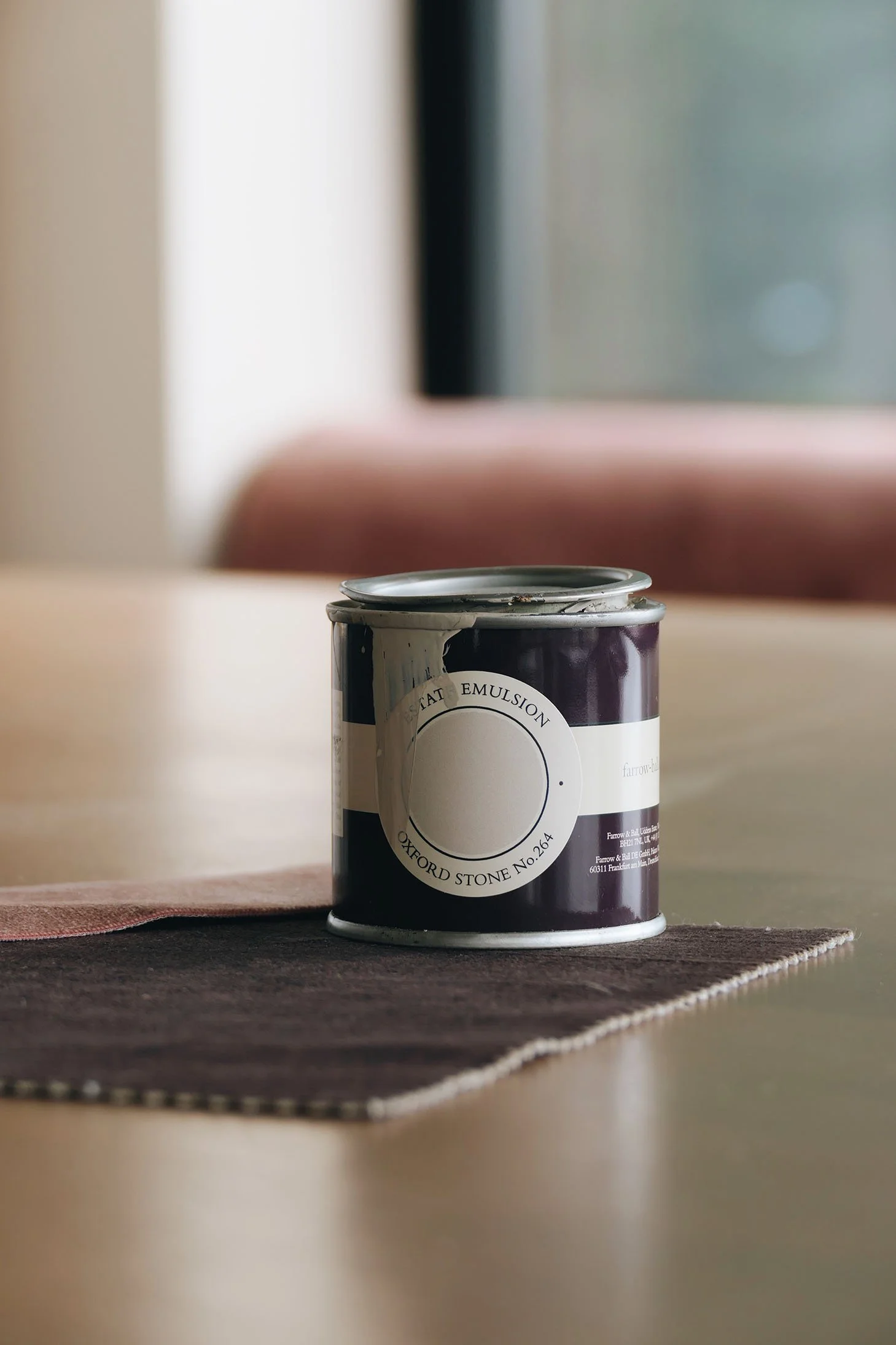
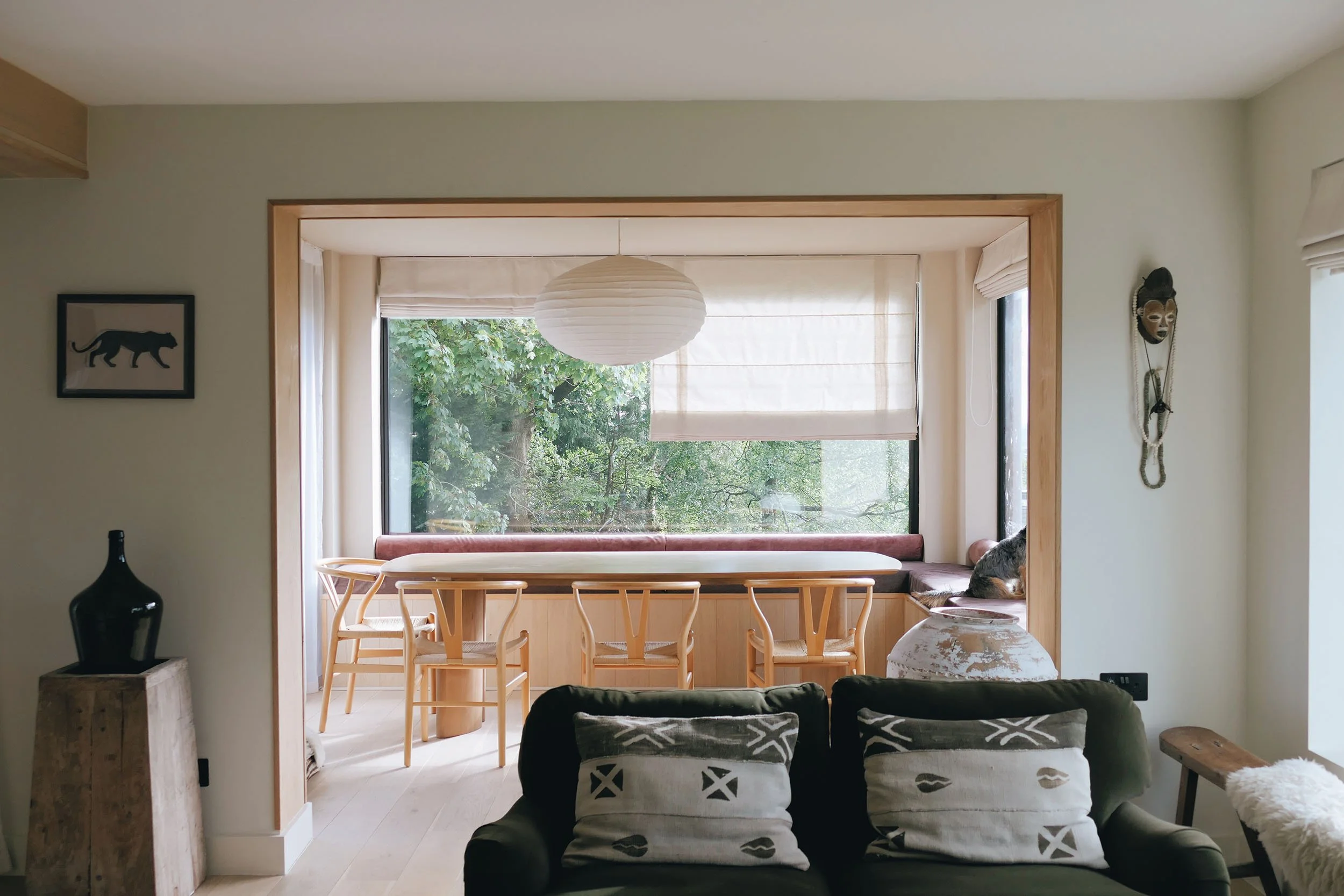
More often than not, it is the quieter, more nuanced tones that create the most cohesive interiors. Recently, while photographing our dining room, it became clear just how much impact this decision can have. Rather than opting for a traditional white, we chose Farrow & Ball’s Oxford Stone — a soft, warm neutral with subtle depth and warmth.
It completely changed the atmosphere of the room.
Creating warmth through tone
What makes colours like Oxford Stone so effective is their ability to sit comfortably alongside other materials rather than competing with them.
In our case, the softer off-white tone helped draw out the warmth already present throughout the space:
the natural timber of the dining table and chairs
the wooden flooring
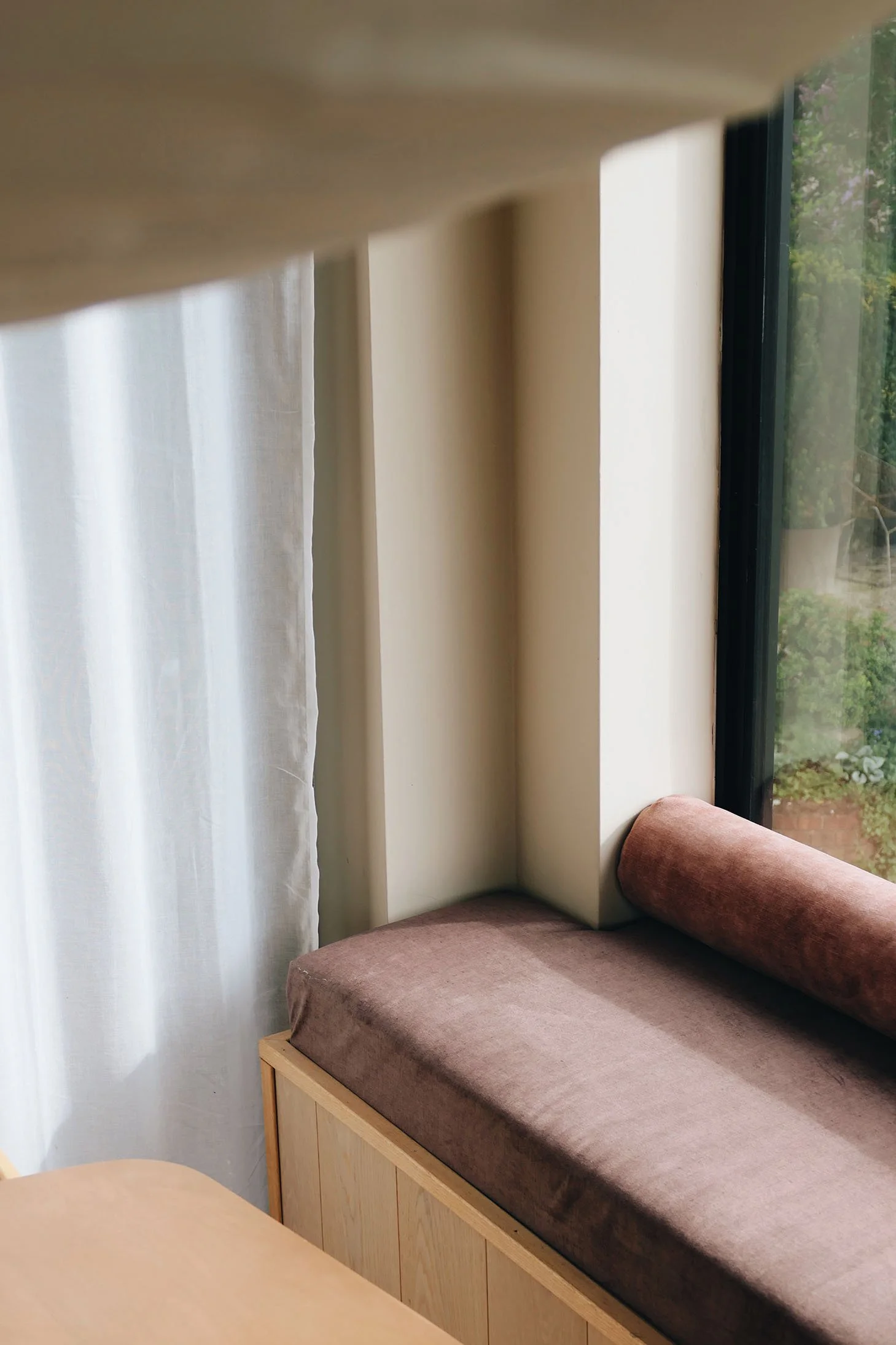
the brown velvet seating
burnt red velvet bolsters
oatmeal-toned blinds
a softly textured off-white pendant light
Instead of creating contrast, the walls allowed these materials to feel connected. The room immediately felt calmer and more cohesive.
The difference between warm and cold whites
One of the most overlooked aspects of interior design is the undertone within a paint colour. Some whites carry cooler blue or grey undertones, while others lean warmer with hints of cream, stone or taupe. These subtle shifts dramatically affect how a room feels, particularly as light changes throughout the day.
A cooler white can feel crisp and architectural in the right setting, especially in spaces with strong natural light or more minimal material palettes. Warmer off-whites, however, tend to soften interiors, particularly when paired with timber, textured fabrics and layered natural finishes.
The key is not necessarily choosing “the best white”, but choosing the white that responds best to the materials already within the room.


Why sampling paint matters
Paint is one of the few design decisions that changes entirely depending on light, orientation and surrounding textures. A colour that looks perfect online or in a showroom can feel completely different once applied to a wall at home. This is why sampling becomes such an important part of the process.
Buying multiple sample pots and testing colours directly within the space allows you to understand:
how the colour changes throughout the day
how it reacts to natural and artificial light
how it works alongside flooring, fabrics and furniture
whether it feels warm, flat, soft or overly bright
Often, the right colour only becomes obvious once several options are viewed side by side.
Building a more considered interior
The most successful interiors are rarely built around one standout element. Instead, they rely on subtle relationships between colour, texture and material.
A softer off-white may seem like a small decision, but it can influence how every other surface within a room is perceived. Timber feels richer, fabrics feel softer, and the overall atmosphere becomes more balanced.
In many ways, these quieter decisions are what make a home feel truly considered. Sometimes the difference between a room feeling finished and a room feeling flat is not the furniture or lighting but simply choosing a warmer white.