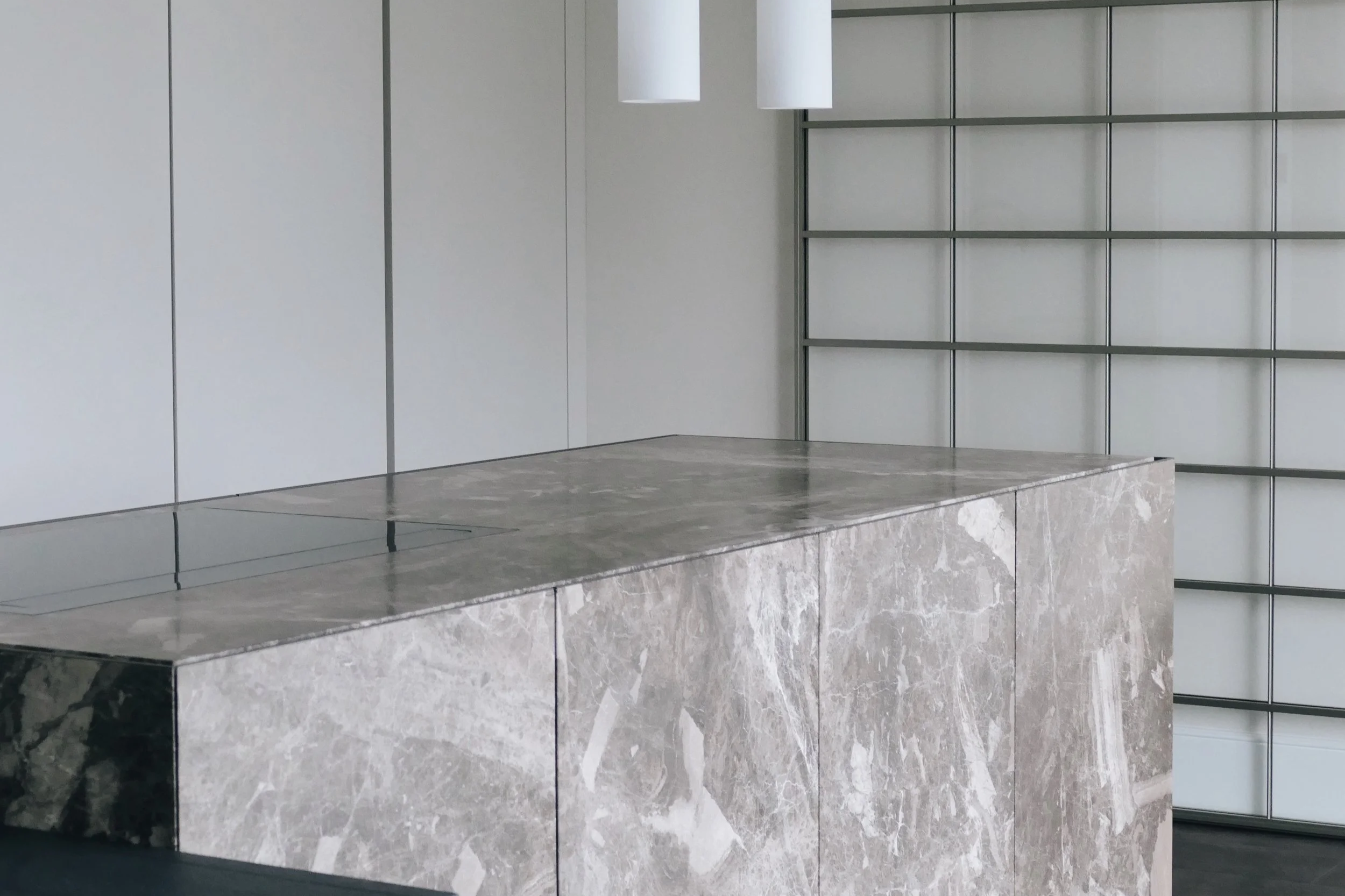
Marble vs Porcelain in residential design.
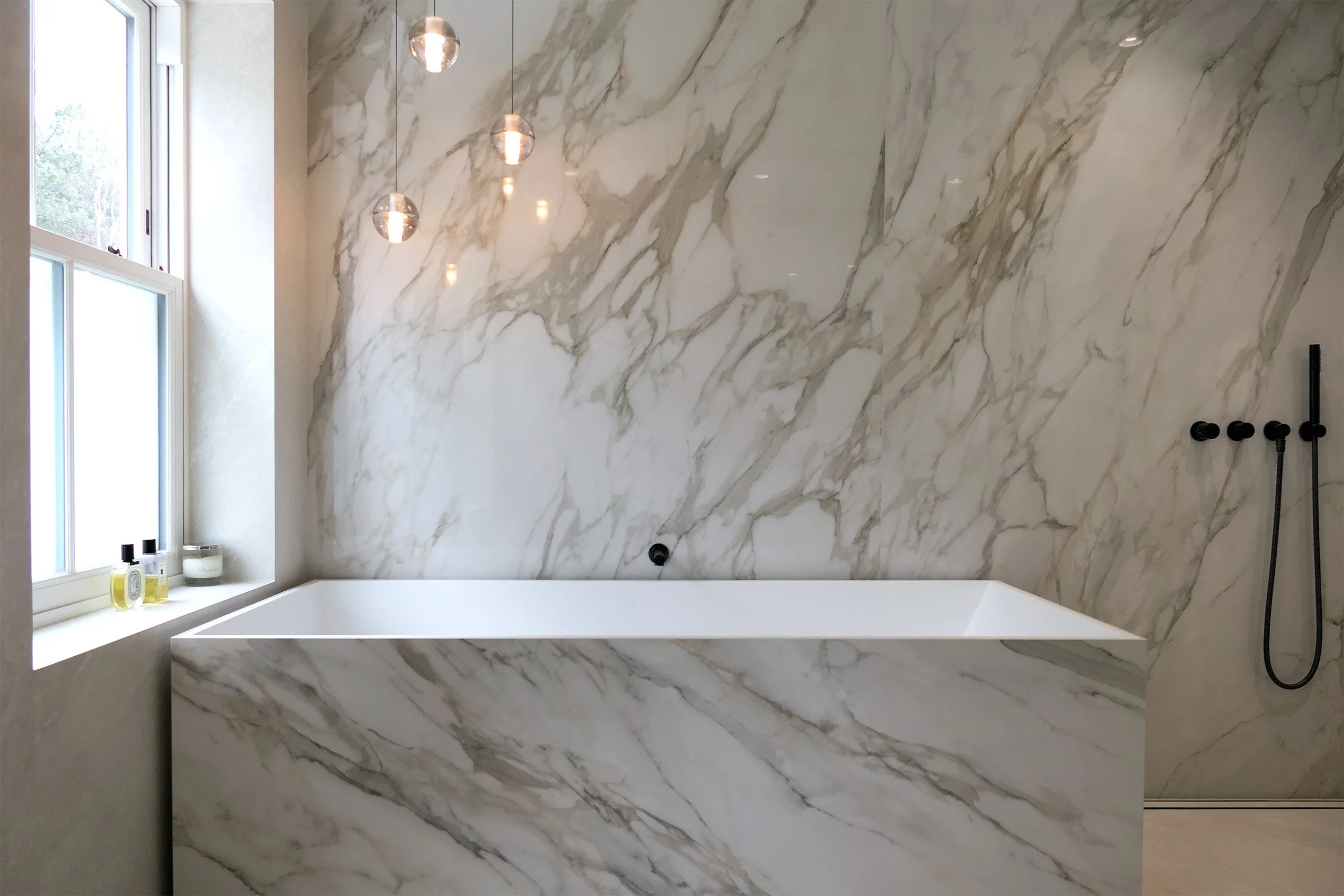
For decades, marble has been associated with timeless residential architecture and refined interior design. Its natural veining and depth have long made it one of the most desirable materials within kitchens, bathrooms and architectural detailing.
Yet increasingly, porcelain is becoming a serious alternative, not simply as an imitation of natural stone, but as a material with its own architectural strengths. Advances in large-format porcelain manufacturing have transformed how the material is used within residential projects, allowing architects and homeowners to achieve the visual richness of stone with greater flexibility, durability and consistency.
Specialists such as PietraCasa have helped lead this shift in the UK, supplying large-format porcelain surfaces from some of Europe’s most respected manufacturers including Florim, Inalco, Keope and Iris Ceramica. Together, these collections demonstrate how porcelain has evolved into a material capable of delivering both technical performance and sophisticated design language across contemporary homes.
The enduring appeal of marble
There is still something unmatched about natural marble. Its movement, variation and imperfections create surfaces that feel entirely individual. Marble carries a softness and depth that has defined architecture for centuries, bringing a sense of permanence and quiet luxury to residential spaces.
Used thoughtfully, marble introduces:
natural texture and variation
visual depth
timeless character
material authenticity
However, natural stone also requires ongoing maintenance and care, particularly in kitchens, bathrooms and high-use environments where staining and etching can occur over time.
The evolution of porcelain surfaces
Large-format porcelain has advanced considerably in recent years.
Manufacturers such as Florim have become known for creating surfaces that replicate the subtle movement and tactility of natural materials while offering greater durability and versatility. Their collections often explore stone, marble and concrete-inspired finishes with remarkable depth and realism.
Meanwhile, Inalco focuses heavily on innovation in large-format slabs, producing ultra-thin porcelain surfaces suitable for kitchens, bathrooms, furniture and architectural applications. Their finishes often combine soft stone textures with cleaner, more contemporary detailing.
Brands such as Keope bring a more natural material language into porcelain design, with collections inspired by limestone, travertine and textured stone surfaces suited to both interior and exterior environments.
Similarly, Iris Ceramica has become recognised for highly refined porcelain surfaces that combine architectural minimalism with rich material effects, often blurring the distinction between natural and engineered finishes.
Material effects and finishes
One of the reasons porcelain has become increasingly popular within residential design is the diversity of finishes now available.
Large-format porcelain surfaces can replicate:
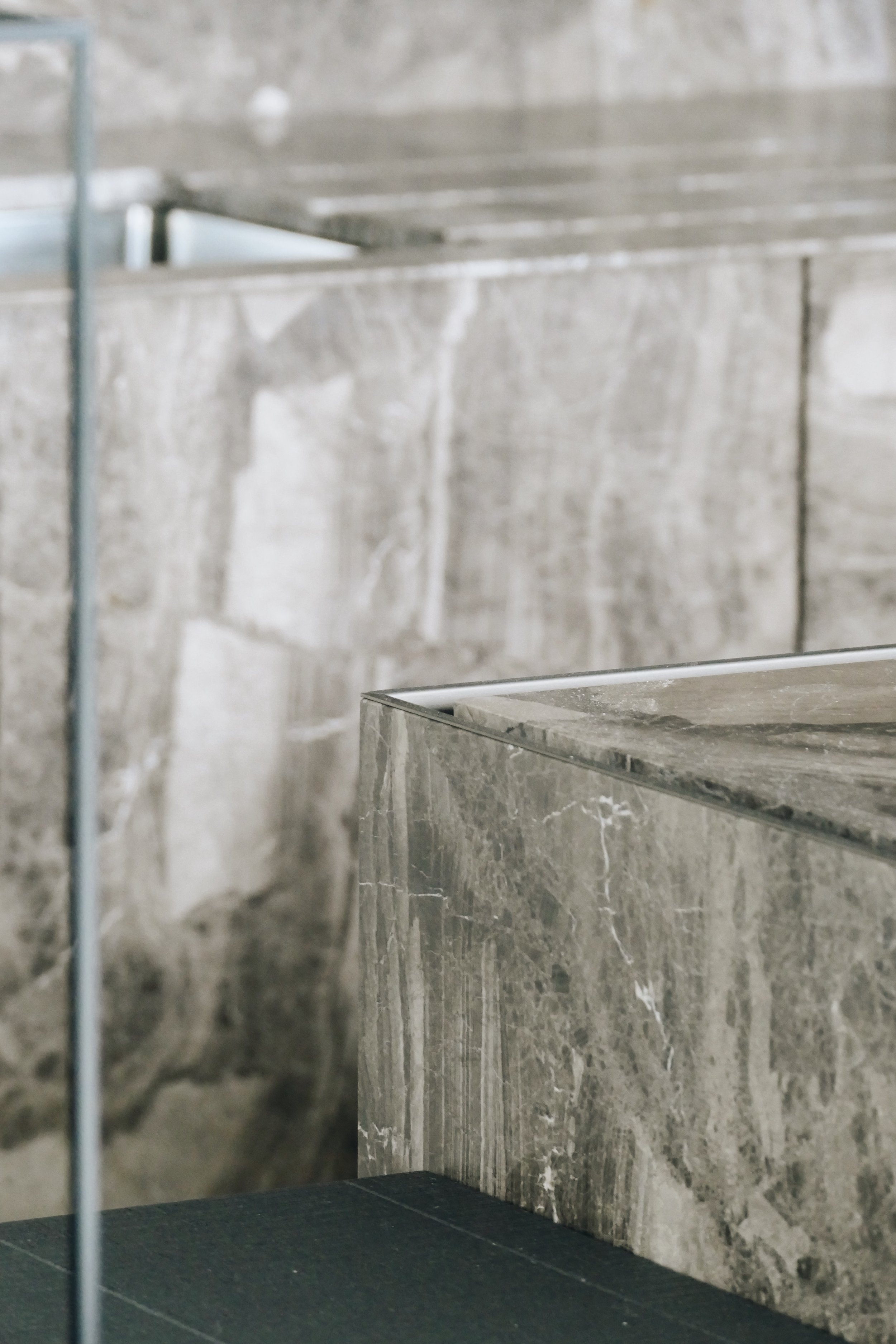
marble veining
soft limestone textures
travertine finishes
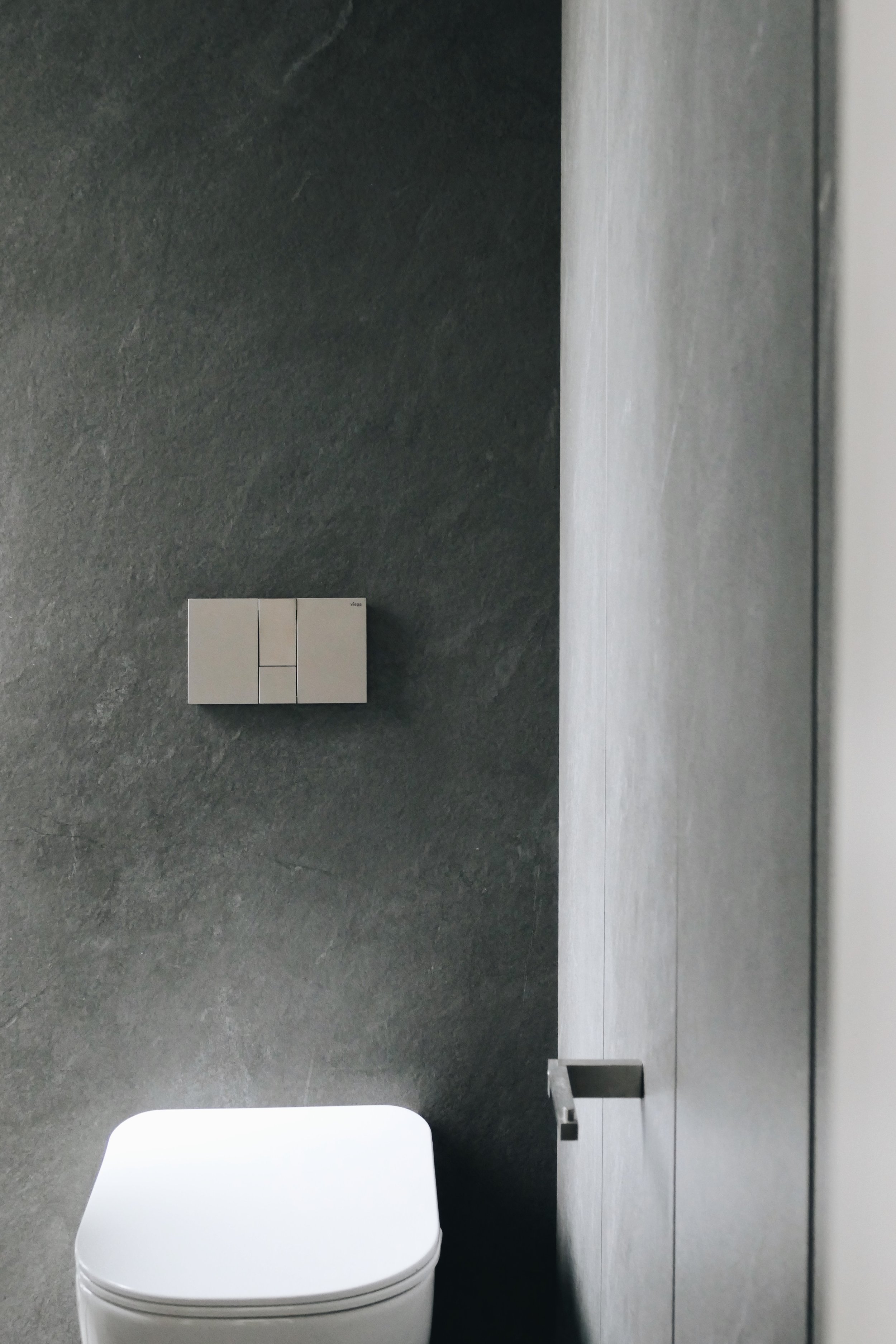
poured concrete effects
oxidised metal surfaces
textured stone detailing
These finishes allow designers to create spaces that feel layered and material-led, while maintaining consistency across larger surfaces.
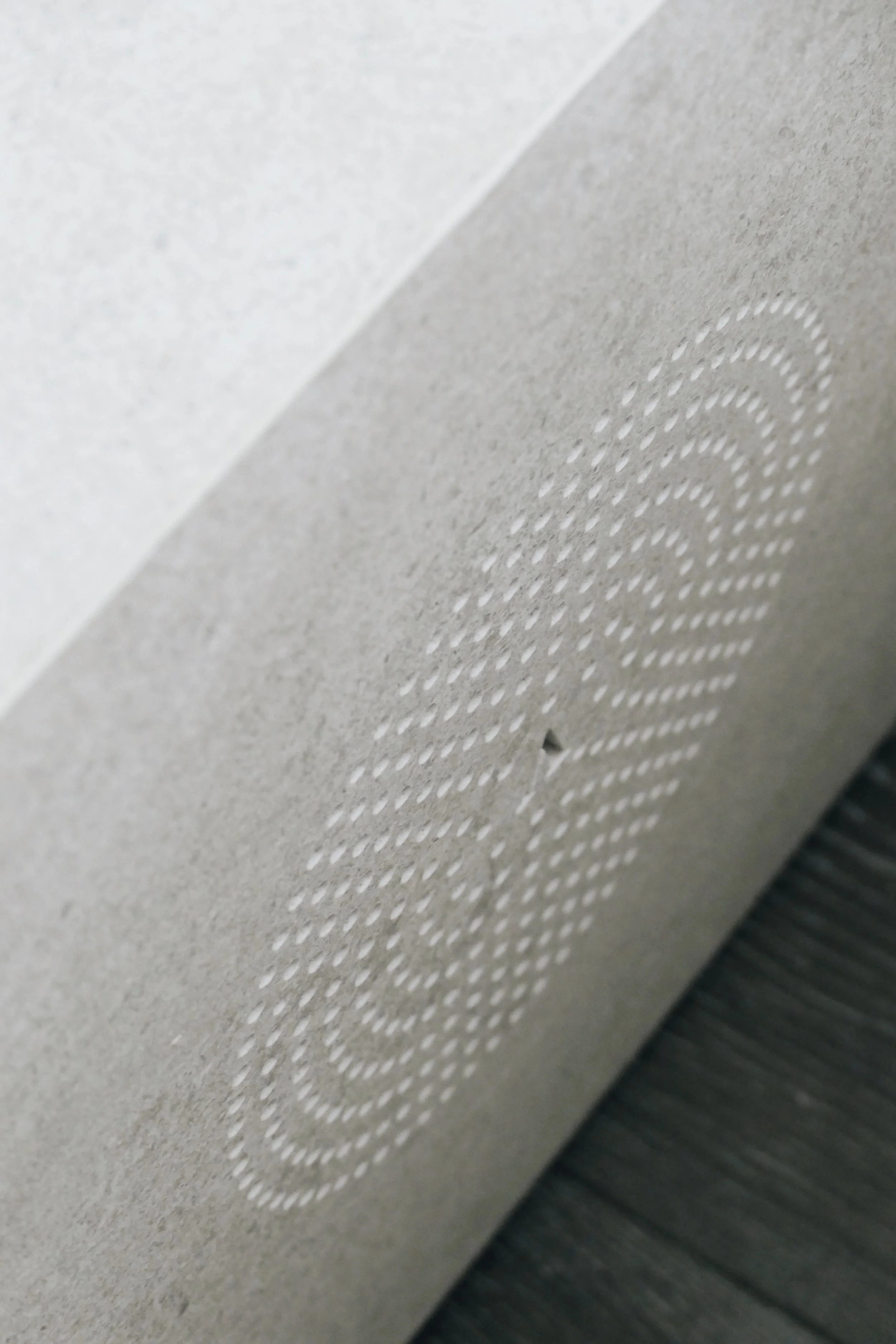
Matt and soft-touch finishes tend to create a calmer, more natural atmosphere, particularly when paired with timber, lime plaster and warm neutral palettes. More polished finishes can introduce depth and reflectivity, often working well within bathrooms or darker interiors where light becomes part of the composition.
Interior applications
Within interiors, porcelain now extends far beyond flooring.
Large-format slabs are increasingly used for:
kitchen worktops
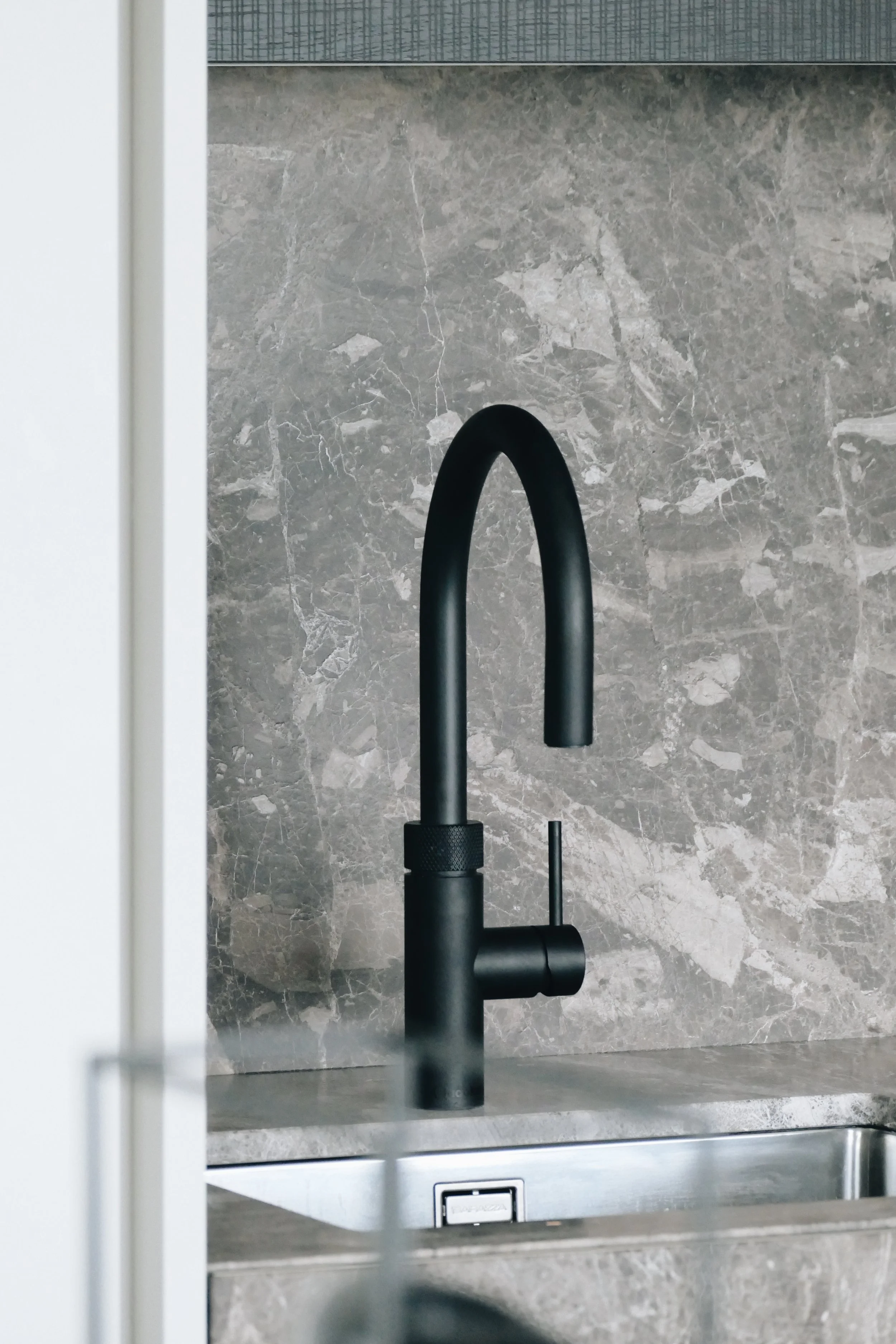
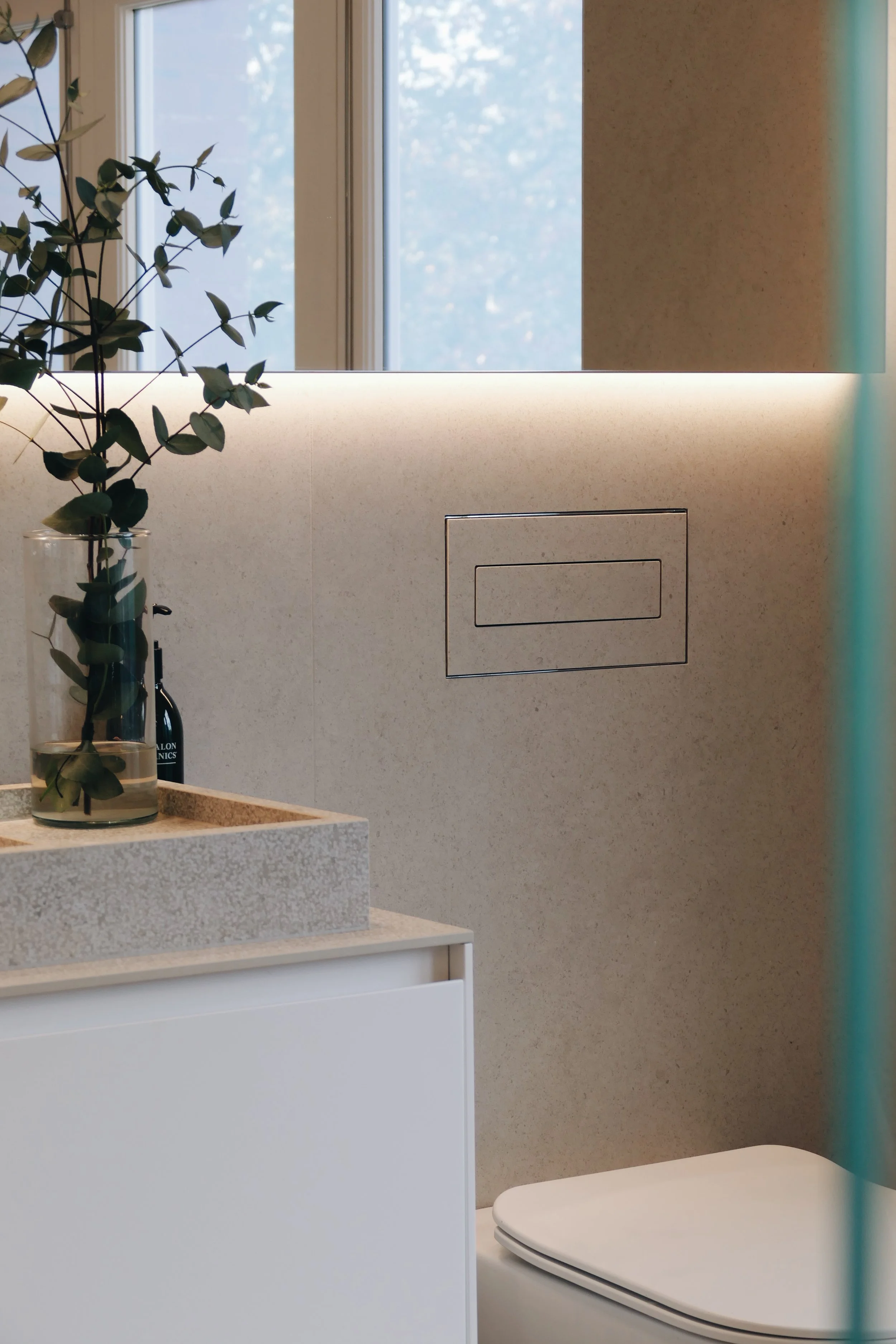
splashbacks
bathrooms
shower walls
bespoke joinery
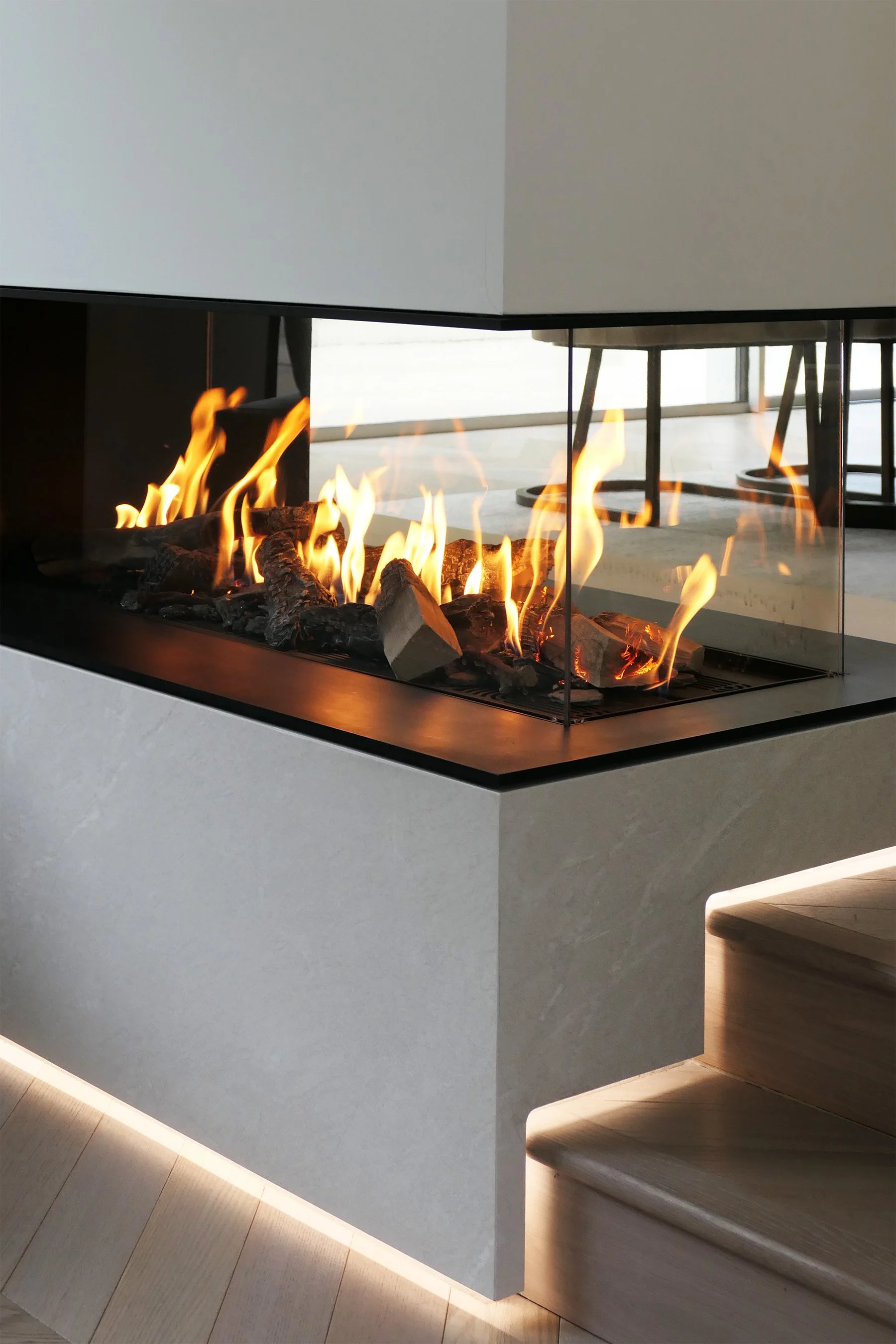
fireplaces
dining tables and furniture surfaces
Because porcelain is non-porous and highly resistant to heat, staining and scratching, it offers practical advantages for daily living without sacrificing visual refinement. Minimal grout lines also create cleaner, quieter surfaces that feel more architectural and less fragmented.
Extending materials outdoors
Porcelain also performs exceptionally well externally.
Its resistance to moisture, temperature changes and fading makes it particularly suitable for:
terraces
outdoor kitchens
patios
pool surrounds
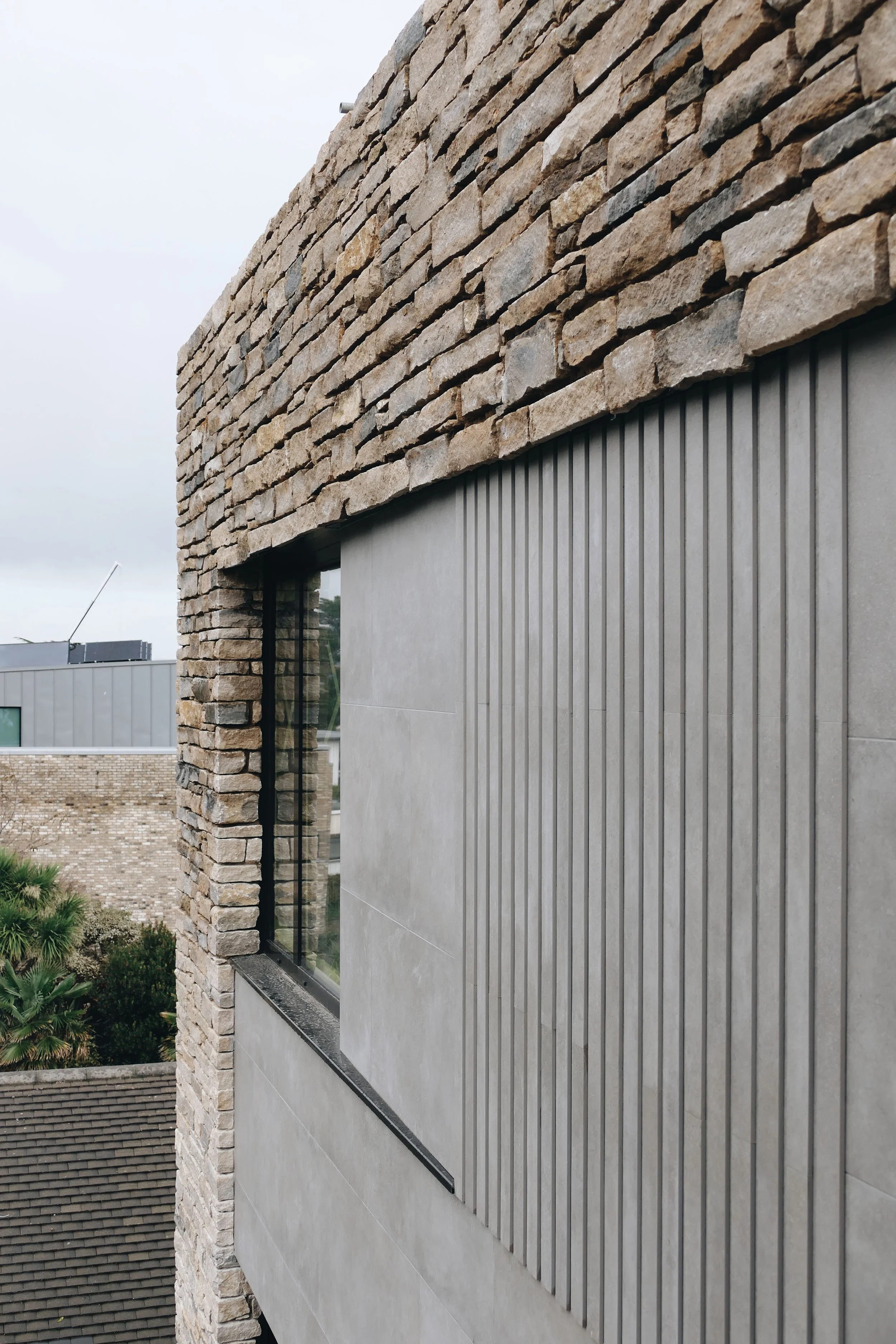
exterior cladding
This allows architects and designers to continue material palettes from interior to exterior spaces, creating a stronger sense of continuity throughout the home.
Choosing between marble and porcelain
The decision between marble and porcelain is not necessarily about choosing one over the other. Marble offers authenticity and natural variation that remains deeply compelling. Porcelain, meanwhile, offers technical performance, consistency and versatility that increasingly align with contemporary residential living.
The most successful homes are often those that understand the strengths of both materials, using each where they feel most appropriate within the architecture.
What is clear, however, is that porcelain is no longer viewed simply as an alternative to stone. Through advancements in design and manufacturing, it has become a material category in its own right — capable of creating calm, refined and highly durable spaces across both interior and exterior residential design.